Home
Home
 About Us



Preventing trade defence lawsuits in wood industry: Need for coordination with customs
28/12/2020 12:00
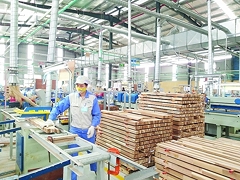
Vietnam's wood industry increasingly faces trade defence lawsuits, especially the lawsuit against tax evasion. To control risks and minimise damages, the promotion of close coordination between the business community and State management agencies, especially Customs, is recognised as an important and feasible solution.
Risk increasing
At the conference “Strengthening risk control in timber import and export activities” held on December 21, Chairman of Vietnam Timber and Forest Products Association (Viforest), Do Xuan Lap, said the Government’s assessment showed the wood industry is one of the leading industries contributing to the increase of export turnover of the country’s agro-forestry products. However, a key content mentioned by the chairman is that the wood industry is facing trade tensions among big countries around the world.
From the beginning of the year to now, the wood industry has continuously faced anti-dumping lawsuits from the US and Korea, specifically for plywood related to commercial fraud and tax evasion. Plywood is not the only item. There are still a number of Vietnam's export products with great risks in the future. Most recently, the US Trade Representative accused the Vietnamese timber industry of using illegal timber in the domestic market and in products exported to the US.The risk that the US government applies trade restrictions on the Vietnamese timber could be very high.
Phung Gia Duc, deputy head of the Foreign Trade Defence Handling Division under the Ministry of Industry and Trade’s Department of Trade Defence, said Viet Nam has faced a total of 199 cases. In the past five years, there were 97 commercial defence investigations. The highest numbers were the US (40 cases), India (27 cases), Turkey (23 cases), Australia (16 cases), Canada (16 cases), the EU (14 cases) and the Philippines (12 cases). In 2020, Viet Nam is under investigation in a total of 37 cases.
Notably, investigations related to wooden products did not incur in many previous years, but from 2019 to now, investigations have increased. In 2015, Turkey investigated the anti-tax evasion for plywood; in the same year, India investigated anti-dumping with MDF wood products. In 2019, South Korea investigatedanti-dumping forplywood. In 2020, Vietnam has been investigated by India fordumping MDF wood and the US investigated the anti-tax evasion for plywood.
Promote coordination
Head of Origin and Intellectual Property Division (Customs Control and Supervision Department under the General Department of Vietnam Customs), Hoang ThiThuy, said the current challenges are the form of fraud is increasingly sophisticated and its scale is increasingly wide; legal documents donot cover all arising cases in reality; sanctions have not been strict; and the awareness of some Vietnamese enterprises is still limited, leading to support for illicit trade.
To avoid anti-dumping and anti-tax evasion investigations, Duc said local businesses need to have knowledge about trade defence. When exporting to a certain market, they should getinformation from importers.
Phan Mai Quynh from the Self-Defence and Damage Investigation Division (Department of Trade Defence) said before any incident occurs, exporters need to be updated onthe early warning list of the Department of Trade Defence; build a team specialising in internal trade defence; find out about the trade defence regulations of the investigating country;diversify their products, focus on high quality products and promote market diversification.
“For local manufacturers, they need to monitor the goods imported into Viet Nam, and at the same time use trade remedies to protect the domestic manufacturing industry. If there is careful preparation, theywill overcome the barriers of anti-dumping investigation from other countries,” Quynh said.
Thuy suggested that the wood industry coordinate more closely and effectively with the Customs sector in identifying risky items and firmswith risk of origin fraud and illicit transshipment; build a channel to connect information between Viforest with State management agencies to regularly update information on signs of origin fraud and illicit transportation, accordingly, the agencies soon apply timely interventions. Firms should improve the mechanism of supervising and monitoring the use of wood materials; raise awareness of origin fraud and trade remedies evasion,Thuy said.
Regarding trade fraud, Vice Chairman of the Handicraft and Wood Industry Association of HCM City (HAWA), Phung Quoc Man, said members of associations in the wood industry may know about frauds of Vietnamses enterprises and FDI enterprises, but they do not know with whom they can share the problem.
“Customs has proposed to build an information channel to update regularly, I feel very good but the connection mechanism is not specific. For example, members of the association in Binh Duong, HAWA realise that there are abnormal signs of FDI enterprises in their localities, but they do not know the focal point to share information. Hopefully, after this conference, authorities can work with associations to have a connection mechanism. The focal point for receiving information, monitoring and supervising needs to be specific,” Man said.
Source: Customs News
Risk increasing
At the conference “Strengthening risk control in timber import and export activities” held on December 21, Chairman of Vietnam Timber and Forest Products Association (Viforest), Do Xuan Lap, said the Government’s assessment showed the wood industry is one of the leading industries contributing to the increase of export turnover of the country’s agro-forestry products. However, a key content mentioned by the chairman is that the wood industry is facing trade tensions among big countries around the world.
From the beginning of the year to now, the wood industry has continuously faced anti-dumping lawsuits from the US and Korea, specifically for plywood related to commercial fraud and tax evasion. Plywood is not the only item. There are still a number of Vietnam's export products with great risks in the future. Most recently, the US Trade Representative accused the Vietnamese timber industry of using illegal timber in the domestic market and in products exported to the US.The risk that the US government applies trade restrictions on the Vietnamese timber could be very high.
Phung Gia Duc, deputy head of the Foreign Trade Defence Handling Division under the Ministry of Industry and Trade’s Department of Trade Defence, said Viet Nam has faced a total of 199 cases. In the past five years, there were 97 commercial defence investigations. The highest numbers were the US (40 cases), India (27 cases), Turkey (23 cases), Australia (16 cases), Canada (16 cases), the EU (14 cases) and the Philippines (12 cases). In 2020, Viet Nam is under investigation in a total of 37 cases.
Notably, investigations related to wooden products did not incur in many previous years, but from 2019 to now, investigations have increased. In 2015, Turkey investigated the anti-tax evasion for plywood; in the same year, India investigated anti-dumping with MDF wood products. In 2019, South Korea investigatedanti-dumping forplywood. In 2020, Vietnam has been investigated by India fordumping MDF wood and the US investigated the anti-tax evasion for plywood.
Promote coordination
Head of Origin and Intellectual Property Division (Customs Control and Supervision Department under the General Department of Vietnam Customs), Hoang ThiThuy, said the current challenges are the form of fraud is increasingly sophisticated and its scale is increasingly wide; legal documents donot cover all arising cases in reality; sanctions have not been strict; and the awareness of some Vietnamese enterprises is still limited, leading to support for illicit trade.
To avoid anti-dumping and anti-tax evasion investigations, Duc said local businesses need to have knowledge about trade defence. When exporting to a certain market, they should getinformation from importers.
Phan Mai Quynh from the Self-Defence and Damage Investigation Division (Department of Trade Defence) said before any incident occurs, exporters need to be updated onthe early warning list of the Department of Trade Defence; build a team specialising in internal trade defence; find out about the trade defence regulations of the investigating country;diversify their products, focus on high quality products and promote market diversification.
“For local manufacturers, they need to monitor the goods imported into Viet Nam, and at the same time use trade remedies to protect the domestic manufacturing industry. If there is careful preparation, theywill overcome the barriers of anti-dumping investigation from other countries,” Quynh said.
Thuy suggested that the wood industry coordinate more closely and effectively with the Customs sector in identifying risky items and firmswith risk of origin fraud and illicit transshipment; build a channel to connect information between Viforest with State management agencies to regularly update information on signs of origin fraud and illicit transportation, accordingly, the agencies soon apply timely interventions. Firms should improve the mechanism of supervising and monitoring the use of wood materials; raise awareness of origin fraud and trade remedies evasion,Thuy said.
Regarding trade fraud, Vice Chairman of the Handicraft and Wood Industry Association of HCM City (HAWA), Phung Quoc Man, said members of associations in the wood industry may know about frauds of Vietnamses enterprises and FDI enterprises, but they do not know with whom they can share the problem.
“Customs has proposed to build an information channel to update regularly, I feel very good but the connection mechanism is not specific. For example, members of the association in Binh Duong, HAWA realise that there are abnormal signs of FDI enterprises in their localities, but they do not know the focal point to share information. Hopefully, after this conference, authorities can work with associations to have a connection mechanism. The focal point for receiving information, monitoring and supervising needs to be specific,” Man said.
Source: Customs News
Các tin khác
- Viet Nam extends anti-dumping duties on some Thai sugar products to 2031 (05/06/2026)
- Hong Kong: Ministry of Commerce Rules on Inheritance of Anti-dumping Duty Rates for Copolymer Polyoxymethylene Imports Originating from S Korea, Thailand and Malaysia (05/06/2026)
- Early-season Vietnamese lychees conquer US consumers (05/06/2026)
- Global rubber prices surge, raising hopes for Vietnamese exporters (05/06/2026)
- Modern logistics creates new growth opportunities for Lang Son’s border-gate economy (05/06/2026)